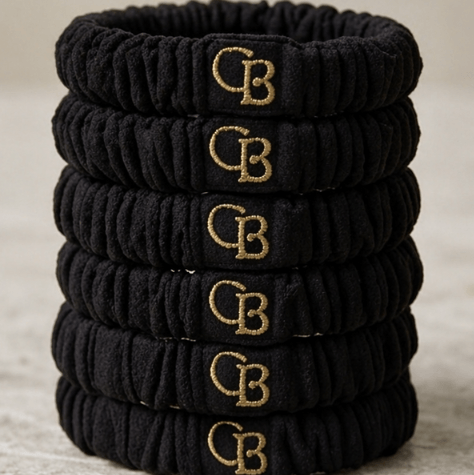
Plastic turns up in places you would never check, and the loop around your wrist is one of them. Ciao Bella has built much of its message around that quiet fact, so it is worth unpacking what plastic in a hair tie actually means and whether it is a problem worth caring about.
The case against plastic hair ties, which Ciao Bella and a few other makers put forward, rests on three plain points. The first is what these ties shed while you wear them. The second is how long they last once you throw them out. The third is whether the alternatives on sale are honestly better or just dressed up to look that way. Take them one at a time.
What “Plastic” Means in a Hair Tie
A typical hair tie is a small textile object, and most of that textile is synthetic. Polyester and nylon make up the visible braided sleeve. A stretchy center of spandex, also called elastane, gives the snap. All three come from petroleum. So even though a hair tie looks like fabric rather than a plastic bottle, chemically it sits in the same family. It is a useful reframe, because once you see the hair tie as a plastic product, the rest of the argument follows the same logic we already apply to bottles and bags. The label rarely helps, since hair ties almost never list materials at all. You buy them by color and size, not by composition, which is one reason the plastic content stays invisible to most shoppers.
See also: Top 3 Melbourne Travel Attractions Tourists Love
The Shedding Question
Synthetic textiles release microscopic fibers during normal handling and washing. Studies of synthetic clothing have measured this shedding for years, finding that ordinary wear sends tiny plastic strands into water, air, and dust. A hair tie is a small piece of the same kind of material, worn directly against hair and skin every single day. No one has pinned down the exact shedding rate of one hair tie, and any brand quoting a precise figure is estimating. The defensible point is simpler: a synthetic item in constant contact with you is one more source of synthetic fiber in your surroundings, and lowering the count of synthetic items you wear is one of the few exposure levers an individual controls. It is the precautionary version of the argument, not a scare claim, and it holds up better than any specific shedding number a marketer might invent.
Centuries in the Ground
The disposal side is where the argument lands hardest. Polyester and nylon do not biodegrade. A discarded synthetic hair tie can persist in soil for hundreds of years, breaking into ever smaller plastic fragments without ever truly disappearing. These ties are also too small and too mixed in material to be recycled in any normal system, so they skip recycling entirely and head straight to landfill. One person’s steady replacement habit becomes a slow, permanent trickle of plastic.
Scale it up the way researchers do with other small plastics, and the totals climb fast. Billions of these ties are made and discarded worldwide, each one a tiny object engineered, in a sense, to outlive the person who wore it.
What Counts as a Real Alternative
Here is where buyers get tripped up. Plenty of products now carry green-sounding labels, and not all of them earn it. Take a hair tie made from recycled polyester. It still is plastic. It reuses a plastic feedstock, which beats virgin material, yet it still sheds synthetic fiber and still will not break down. A genuine alternative changes the material itself, moving to plant or tree-derived fiber with a natural center that soil can actually process at the end of its life. The test is whether the material would eventually rot in a compost pile or soil. Plastic, recycled or not, fails that test. Biodegradable is the word to watch on labels, because it has no strict legal definition in many places. Ask under what conditions and over what timeframe, since a fiber that breaks down in an industrial composter may sit unchanged in a home bin.
Reading Labels Without Getting Fooled
You can judge most claims with a short checklist. Read the full material list, including the stretchy center, since that is the most common hiding place for synthetics. Treat the word recycled as a partial win, not a clean one, because recycled plastic is still plastic. Look for specific fiber names like cotton, natural rubber, or pineapple leaf fiber rather than vague phrases like eco-friendly or sustainable, which carry no fixed meaning. And be cautious with any precise number on plastic saved or carbon avoided unless the brand shows how it got there. Treat certifications as helpful but not final, since some are rigorous and others are closer to pay-to-display.
The case against plastic in a hair tie is not that one small loop will sink the planet. It is that an item used this often, replaced this casually, and made almost entirely of petroleum adds up quietly across millions of wrists, and that a real plant-based version finally gives you a way to opt out of that math.