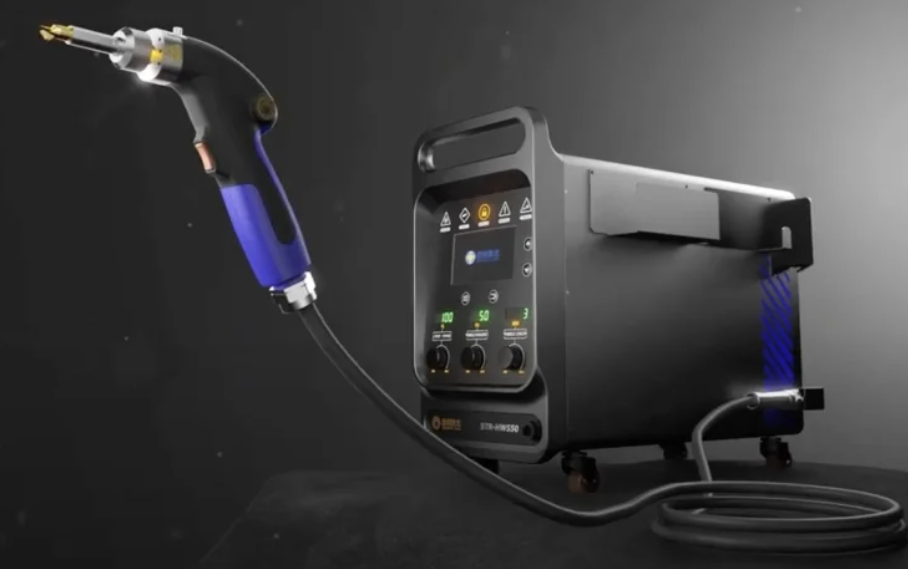
Product development often begins long before a finished item reaches the customer. Designers and engineers may create several versions of a metal enclosure, frame, bracket, appliance component, or mechanical assembly before deciding which design should move into regular production. At this stage, flexibility matters because the team may need to modify dimensions, change materials, test different joints, or produce only a small number of units. A handheld laser welding machine can become useful in this environment by giving fabrication teams another way to turn metal concepts into physical prototypes without depending entirely on large-scale production equipment.
Prototype manufacturing is different from high-volume manufacturing. A production line is usually optimized around repetition, while a development workshop needs to accommodate change. One prototype may require a completely different welding position from the next. Some components may be thin and detailed, while others may involve frames or assemblies with more complicated geometries. Equipment that allows operators to adapt to these changing requirements can therefore become part of a more flexible product development process.
The value of this technology is not limited to making prototypes faster. It can also influence how designers think about joints, materials, surface appearance, assembly methods, and manufacturing possibilities. When fabrication becomes easier to adjust during development, teams can test ideas more practically before committing to expensive tooling or large production runs.
Turning Digital Designs Into Physical Parts
Modern product development often begins with computer-aided design. A three-dimensional model can show dimensions, clearances, joints, and overall appearance, but a digital model cannot always reveal how a physical assembly will behave during manufacturing.
Building a prototype exposes practical issues that may not have been obvious on screen. A joint may be difficult to access, a component may need additional support, or the selected material may behave differently than expected during fabrication. Flexible welding equipment can help development teams make physical changes without creating an entirely new production setup for every revision.
See also: The Role of Technology in Smart Farming
Prototypes Need Room for Experimentation
The first version of a product is rarely the final version. Designers may change the thickness of a panel, reposition a bracket, modify a corner, or alter the way several components connect. Each change can require a new fabrication approach.
This is where a flexible welding setup can support experimentation. Instead of treating every prototype as a miniature mass-production project, the workshop can approach each version according to its specific requirements. This can be especially useful for companies developing products in small quantities where dedicated tooling would not yet make financial sense.
Exploring Different Joint Designs
The welding process can influence how a product is designed. Some joints may be easy to manufacture but visually unattractive, while others may improve appearance but require greater fabrication precision. During development, engineers need the opportunity to compare these possibilities.
Testing different joint configurations on physical samples can provide information that drawings alone cannot deliver. The team can evaluate accessibility, appearance, alignment, finishing requirements, and overall assembly quality. This feedback can then be incorporated into the next design revision.
Small Changes Can Prevent Expensive Production Problems
One of the main purposes of prototyping is to identify problems before they become expensive. Discovering a manufacturing issue after thousands of units have already been produced can lead to significant redesign and production costs.
A flexible development process allows companies to identify these issues earlier. A prototype can reveal that two components interfere with each other, that a weld is difficult to access, or that a particular surface finish requires too much additional work. Solving such problems during development can make the eventual production process more predictable.
Supporting Small Batch Manufacturing
Not every product is intended for mass production. Specialist equipment, custom furniture, architectural components, premium fixtures, industrial accessories, and niche consumer products may be manufactured in relatively small quantities.
For these businesses, flexibility can be more valuable than extreme production speed. A handheld laser welding machine can support situations where the same workshop produces several related products but does not have enough volume to justify separate dedicated welding stations for every design.
Small-batch manufacturing also benefits from the ability to make modifications between orders. Customer requirements may change slightly, or a company may introduce an updated version of a product. A flexible welding process can make these adjustments easier to accommodate.
Appearance Can Influence Product Development
In many products, welding is not hidden. Metal furniture, lighting structures, architectural elements, premium equipment, kitchen products, display systems, and decorative components may expose welded areas to the customer.
This means appearance needs to be considered during design rather than only during final finishing. Prototype welding gives designers an opportunity to see how joints actually look on the finished material. They can then modify the geometry or finishing approach before the design is finalized.
A visually acceptable prototype can also help teams communicate their ideas to clients, investors, manufacturers, and other stakeholders. Physical samples often provide a clearer understanding of a product than digital images alone.
Material Decisions Become Easier to Test
Different metals can behave differently during fabrication. A design that works well with one material may require adjustments when produced from another. Thickness, thermal characteristics, surface condition, and joint configuration can all influence the welding process.
Prototype production gives teams an opportunity to test these choices before committing to larger quantities. Instead of selecting materials purely from theoretical calculations, designers can evaluate real samples and observe how the complete assembly performs.
Reducing the Distance Between Designer and Fabricator
In some manufacturing environments, designers and fabrication teams operate separately. A designer creates the product while another team determines how to manufacture it. This separation can sometimes result in designs that look excellent on paper but are difficult or expensive to fabricate.
A more collaborative approach allows fabrication knowledge to influence product design from an earlier stage. When welding equipment is flexible enough to accommodate experimentation, designers can work directly with technicians to test different approaches. This can lead to products that are not only attractive but also easier to manufacture.
Useful for Product Modifications
Product development does not stop when the first version reaches the market. Manufacturers may introduce revised models, improve existing components, or create versions for different customers. These changes can involve relatively small modifications to metal assemblies.
Flexible welding equipment can be useful when a business needs to produce updated components without completely redesigning its manufacturing infrastructure. This is particularly relevant for companies that regularly introduce product variations rather than maintaining one unchanged model for many years.
Training and Process Knowledge Still Matter
Advanced equipment does not remove the need for technical knowledge. Operators need to understand the relationship between machine settings, material characteristics, joint design, and desired results.
During product development, this knowledge becomes especially valuable because the team may be testing unfamiliar materials or new component designs. Recording successful parameters and documenting prototype results can help turn individual experiments into useful manufacturing knowledge.
Planning for the Move From Prototype to Production
A prototype should not only prove that a product can be assembled. It should also provide information about how that product could eventually be manufactured at scale.
During the prototype stage, teams can identify which welding operations are simple to repeat and which require too much manual intervention. They can examine preparation time, accessibility, finishing requirements, inspection needs, and material handling. This information becomes useful when deciding whether the final production process should remain manual, become semi-automated, or move toward a more specialized system.
Where Flexible Welding Fits Into Product Innovation
Innovation often depends on the ability to test ideas without creating excessive cost or delay. Flexible fabrication equipment can support this by allowing development teams to move from drawings to physical samples with fewer restrictions.
The role of a handheld laser welding machine in this process is therefore broader than simply joining two pieces of metal. It can become part of a development environment where designers, engineers, and fabricators test ideas, compare materials, refine joints, improve appearance, and prepare products for future manufacturing.
Conclusion
Product development depends on experimentation, and experimentation requires equipment that can adapt to change. Fixed production systems are extremely valuable once a product is established, but early development often requires a different type of flexibility.
Handheld laser welding technology can support this stage by helping teams produce prototypes, test joint designs, evaluate materials, modify existing products, and prepare small production runs. Its usefulness ultimately depends on the specific materials, product requirements, operator skills, and manufacturing environment.
When welding becomes part of the design process rather than something considered only after a product has been finalized, fabrication knowledge can contribute directly to better product development. This makes flexible welding technology an interesting tool for businesses that rely on customization, continuous improvement, and practical experimentation.
Frequently Asked Questions
Can handheld laser welding be used for prototypes?
It can be suitable for many prototype applications when the machine is compatible with the selected material and thickness. The process can allow development teams to test physical designs before committing to larger production runs.
Why is welding important during product development?
Welding can influence joint strength, appearance, assembly methods, material selection, and production costs. Testing these factors during prototyping can reveal issues before mass production begins.
Is this technology useful for small batch production?
It can be useful where production quantities are relatively limited and product variations are common. The suitability depends on the specific application and machine capabilities.
Can designers benefit from working directly with welding technicians?
Yes. Collaboration can reveal practical manufacturing limitations early and help designers develop products that are easier to fabricate.
Does prototyping reduce production risks?
Physical prototypes can identify design, material, assembly, and manufacturing issues before larger quantities are produced. This can help reduce the likelihood of expensive changes later.
What materials can be used with laser welding?
The suitable materials depend on the particular welding system and application. Common industrial metals may include stainless steel, mild steel, aluminum, and other compatible alloys.
Should prototype welding parameters be documented?
Yes. Recording successful settings, material information, joint designs, and finishing requirements can help the team reproduce successful results and support the transition toward regular production.