The equipment found around a sink often seems insignificant until it stops working properly. A dispenser that releases paper inconsistently, requires unnecessary touching, or becomes empty during a busy period can quickly turn a routine hand-drying task into an inconvenience. This is especially noticeable in places where many people share the same facilities throughout the day. Offices, schools, restaurants, hospitals, retail spaces, and public buildings all depend on small hygiene fixtures working reliably, even though these devices rarely receive attention when everything is functioning normally.
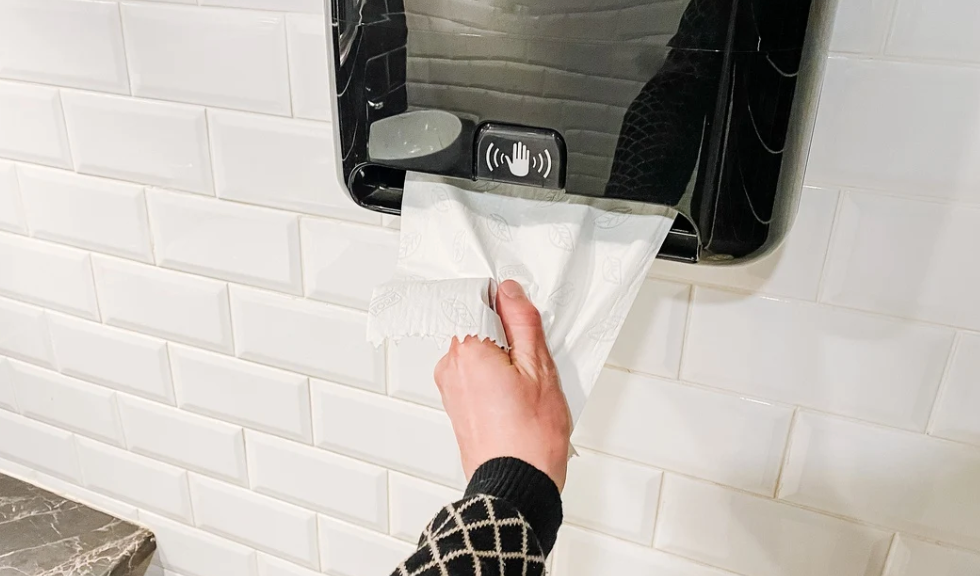
The growing interest in touch-free equipment has encouraged facility designers to reconsider how something as ordinary as paper dispensing should work. An automatic paper dispenser can detect a user’s hand and activate the dispensing mechanism without requiring the person to pull a lever or press a button. That change can reduce one form of physical interaction while also creating opportunities to control how much paper is delivered. More importantly, it can make the experience more predictable when the equipment is correctly selected and installed.
Automation, however, should not be confused with a guaranteed improvement. A sensor can be poorly positioned, a motor can become unreliable, a battery can run out, or the dispenser can struggle with incompatible paper. Good design therefore requires a balance between technology and practical facility management. The most useful systems are those that make the user’s experience simpler while keeping maintenance straightforward for the people responsible for the building.
The Growing Importance of Contact-Free Facility Design
Shared spaces have many points where people repeatedly interact with the same surfaces. Door handles, taps, soap dispensers, hand dryers, and paper dispensers can all become part of a person’s routine within a few seconds.
Reducing unnecessary physical interaction at one of these points does not solve every hygiene concern, but it can contribute to a more considered environment.
The value of touch-free design is therefore best understood as one element within a broader hygiene strategy rather than as a standalone solution.
See also: The Role of Technology in Smart Farming
Why Paper Dispensing Deserves Its Own Design Strategy
Paper towels have a practical purpose: they need to be available quickly, in a usable quantity, at the exact moment someone finishes washing their hands.
A dispenser that makes this process difficult can undermine the otherwise simple workflow.
Automation allows the delivery process to be designed around a more controlled interaction. The user approaches, the system detects the hand, and the mechanism provides paper.
When this sequence works reliably, there is little need for instructions or additional effort.
Sensor Placement Can Make or Break the Experience
The sensor may be small, but its position can determine how intuitive the entire unit feels.
If the detection area is too narrow, users may need to move their hands repeatedly before the dispenser activates. If it is too broad, the machine may respond to movement that was never intended to trigger it.
Surrounding fixtures can also influence the experience. Mirrors, sinks, walls, lighting, and nearby movement may affect how people approach the unit.
For this reason, the installation location should be evaluated as part of the dispenser’s performance rather than treated as a separate decision.
Why Predictable Dispensing Is More Important Than Fast Dispensing
People often assume that the fastest possible response is always desirable. In reality, the ideal dispenser needs to balance speed with control.
A mechanism that releases paper instantly but repeatedly activates by accident may waste material. One that takes too long to respond may frustrate users.
A predictable response is often more valuable than simply making the motor faster. Users should be able to approach the unit naturally and receive paper without having to adjust their behaviour.
Paper Capacity Can Influence Maintenance Schedules
A dispenser’s capacity matters because it determines how frequently staff need to refill it.
A low-capacity unit in a busy facility may require repeated attention throughout the day. A larger-capacity system may reduce the number of refill visits, provided the installation has enough physical space for it.
Facility managers should therefore compare expected traffic with available paper capacity rather than choosing equipment based solely on appearance.
High Usage Requires More Than a Good Sensor
A dispenser can have excellent detection and still perform poorly under heavy traffic if the internal mechanism is not designed for frequent operation.
Busy locations place repeated demands on motors, gears, rollers, sensors, and other moving components.
This is why usage volume should be considered before selecting equipment. A dispenser intended for a small office may not be the best choice for a large public facility.
The Role of Paper in Mechanical Reliability
Paper is not a passive part of the system. Its physical characteristics interact directly with the dispensing mechanism.
Paper that is too thick, too thin, too textured, or incorrectly sized can cause inconsistent feeding depending on the dispenser design.
A procurement decision should therefore include both the machine and the consumable. Testing the intended paper with the selected dispenser can help identify compatibility problems before widespread installation.
Hygiene and Waste Management Can Work Together
A common assumption is that hygiene improvements necessarily require greater consumption. That does not have to be the case.
Controlled dispensing can provide a consistent quantity while still allowing users to obtain enough material for proper hand drying.
The key is finding a dispensing setting that supports the actual task. If the portion is too small, users may trigger the system repeatedly. If it is excessive, paper may be wasted.
The most effective approach is therefore based on real usage rather than theoretical minimum consumption.
Why Cleaning the Equipment Still Matters
Touch-free operation can reduce the need to physically operate the dispenser, but the unit itself remains part of the shared environment.
Dust, water droplets, cleaning chemicals, and general contact around the housing can affect its condition.
Regular cleaning should therefore remain part of the facility’s maintenance schedule. Sensor areas deserve particular attention because dirt or residue may affect detection depending on the design.
Automatic Systems Can Support Different User Needs
People interact with equipment differently. Some users may approach quickly, others slowly. Some may have limited reach, while others may need more space to position their hands comfortably.
This makes accessibility an important consideration.
A well-positioned dispenser should be easy to understand and operate without requiring unnecessary strength or precise movement.
Why Mounting Height Matters
The height of the unit influences both accessibility and convenience.
A dispenser positioned too high may be difficult for shorter users or people with mobility limitations. A unit positioned too low may be more exposed to splashes or accidental contact.
The surrounding sink and counter layout should also be considered because users need enough space to approach the sensor naturally.
Food-Service Areas Need Practical Reliability
Restaurants and food-service environments often have frequent handwashing requirements and demanding cleaning schedules.
A touch-free dispenser can make the interaction with the paper supply simpler for staff and visitors.
However, these locations may also expose equipment to moisture, cleaning products, and repeated use, so durability and ease of cleaning become particularly important.
Healthcare Facilities Have Additional Considerations
Healthcare settings require a more careful approach because hygiene equipment forms part of a larger infection-control environment.
Automatic dispensing can reduce certain forms of direct interaction, but it should operate alongside established cleaning and hygiene procedures.
Reliability is especially important. A dispenser that frequently fails or runs empty can create unnecessary disruption in an environment where basic hand hygiene needs to remain dependable.
Offices Can Prioritize Quiet Operation
In an office, the dispenser may be used less frequently than in a major public facility, but expectations around noise and appearance can be different.
Employees may prefer equipment that operates quietly and blends into the surrounding environment.
A compact automatic system can provide touch-free operation without making the washroom feel overly mechanical or industrial.
Maintenance Should Be Designed Into the Installation
Facility managers need to think about what happens after installation.
Can the paper be replaced quickly? Can the sensor be cleaned? Can batteries be accessed without removing the entire unit? Can common problems be diagnosed without specialized equipment?
These questions may seem secondary during purchasing, but they can have a major effect on the total effort required to keep the system operational.
Battery Life Can Affect User Confidence
Battery-powered equipment provides flexibility, but it introduces another consumable into the maintenance routine.
If batteries are allowed to fail unexpectedly, the dispenser may stop responding even when plenty of paper remains inside.
A planned replacement schedule can reduce this risk. In particularly busy locations, facilities may also want to monitor battery condition more closely.
What Happens When the Dispenser Runs Empty?
An empty dispenser creates a problem regardless of whether it is manual or automatic.
The difference is that some automated systems can potentially provide usage information or other indicators that make supply management easier.
Even without advanced connectivity, staff can improve reliability by establishing refill checks around expected periods of high usage.
A Practical Checklist for Facility Managers
Before installing automated dispensing equipment, teams can consider:
- Traffic: How many users are expected each day?
- Paper type: Is the selected paper compatible with the mechanism?
- Capacity: How often will refilling be necessary?
- Power: Will batteries or fixed power be more practical?
- Sensor range: Can users activate it naturally?
- Accessibility: Is the mounting position suitable for different users?
- Cleaning: Can the housing and sensor be maintained easily?
- Noise: Is the motor appropriate for the surrounding environment?
- Serviceability: Can staff resolve routine problems quickly?
This checklist helps shift the decision away from appearance and toward actual operational needs.
When Automation May Not Be Necessary
Not every facility needs an electronic dispensing system.
A small workplace with limited daily traffic may receive little practical benefit from adding batteries, sensors, and electronic components.
A conventional dispenser can remain a sensible option where simplicity, low initial cost, and minimal technical maintenance are the main priorities.
The purpose of automation should be to solve a real problem, not to introduce technology simply because it is available.
The Future of Smarter Hygiene Stations
As building technology develops, dispensing equipment may become more connected to broader facility-management systems.
Future systems could potentially provide information about paper levels, battery status, usage patterns, and maintenance requirements.
The most useful developments will likely be those that turn this information into practical action. Knowing that a dispenser is nearly empty has value only if staff can use that information to refill it before users encounter a problem.
Final Thoughts
The design of a paper dispenser can influence much more than the few seconds a person spends drying their hands. In shared environments, the same interaction is repeated continuously, meaning small improvements in sensor response, dispensing control, accessibility, and maintenance can accumulate into meaningful operational benefits. Automation provides an opportunity to make that interaction more consistent while reducing the need for certain forms of physical contact.
The technology works best when it is selected with the surrounding environment in mind. Traffic levels, paper compatibility, power requirements, installation height, cleaning routines, accessibility, and maintenance access all need to be considered together. A dispenser that performs exceptionally well in one building may not provide the same results in another because the demands placed on the equipment can be completely different.
Ultimately, the strongest hygiene equipment is not necessarily the most technologically impressive. It is the equipment that users can operate naturally and that maintenance teams can keep running without unnecessary effort. When sensor technology, reliable mechanics, suitable consumables, and thoughtful installation come together, an automatic paper dispenser can become a quiet but useful part of modern facility design, improving everyday routines without making them more complicated.