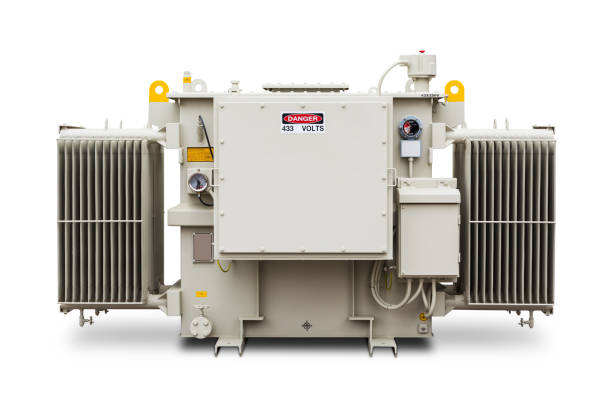
Three-phase distribution transformers are essential components of electrical power networks, supplying electricity to residential communities, commercial buildings, industrial facilities, and public infrastructure. Their performance directly affects power quality, energy efficiency, equipment reliability, and the continuity of electricity supply. For utility providers, evaluating transformer performance is therefore an important part of maintaining a dependable distribution network.
A transformer may appear to operate normally while experiencing excessive losses, uneven loading, deteriorating insulation, or developing internal faults. Utility providers use a combination of electrical measurements, physical inspections, diagnostic tests, and operating data to identify these issues and determine whether equipment continues to meet its design requirements.
Understanding how utility providers evaluate three phase distribution transformer performance helps engineers, facility managers, and electrical professionals appreciate the factors that influence transformer reliability and service life.
Understanding Three-Phase Distribution Transformer Performance
A three-phase distribution transformer transfers electrical energy between circuits through electromagnetic induction. It typically changes medium-voltage electricity into a lower voltage suitable for local distribution and connected equipment.
Transformer performance is not determined by a single measurement. Instead, utility providers assess several characteristics, including electrical losses, voltage regulation, load capacity, temperature, insulation condition, and the ability to operate safely under expected conditions.
Why Performance Evaluation Matters
Regular performance evaluation helps utility providers identify inefficient equipment, investigate recurring faults, and plan maintenance before problems lead to service interruptions.
Key objectives include:
- Maintaining reliable electricity distribution.
- Reducing unnecessary energy losses.
- Ensuring acceptable voltage levels for connected customers.
- Identifying overheating and insulation deterioration.
- Verifying that transformers can handle expected electrical loads.
- Supporting maintenance, replacement, and asset management decisions.
The evaluation process varies according to transformer size, age, design, installation environment, operating history, and the utility’s technical requirements.
1. Evaluating Transformer Loading and Capacity
One of the first considerations is whether a transformer operates within its rated capacity. Excessive loading can increase winding temperatures, accelerate insulation ageing, and reduce equipment reliability.
Measuring Load Current and Demand
Utility providers assess the current flowing through transformer windings and compare it with the equipment’s rated values. Measurements may be collected through installed monitoring systems, field instruments, smart distribution equipment, or periodic site inspections.
For a balanced three-phase system, apparent power can be calculated using:
[
S=\frac{\sqrt{3}\times V_L\times I_L}{1000}
]
In this formula, (S) represents apparent power in kVA, (V_L) is line-to-line voltage in volts, and (I_L) is line current in amperes.
This calculation helps engineers compare actual demand with the transformer’s rated capacity.
However, a transformer should not be judged solely by its average loading. Peak demand, ambient temperature, cooling conditions, harmonics, and the duration of high-load periods can also influence its operating limits.
Identifying Load Imbalances
Three-phase distribution systems may supply a mixture of three-phase equipment and single-phase customers. If the connected loads are not distributed evenly across the phases, current imbalances can develop.
Utility providers examine phase currents and, where appropriate, voltage measurements to identify uneven loading. Significant imbalance may contribute to additional losses, overheating, and voltage quality problems.
Possible corrective measures include redistributing single-phase connections, reviewing feeder arrangements, and assessing whether additional transformer capacity is needed.
2. Measuring Energy Losses and Efficiency
Electrical losses are an important indicator of transformer performance. Even a transformer that delivers power reliably can waste energy if its losses are higher than expected.
Understanding Core and Winding Losses
Transformer losses generally include two principal categories.
Core losses: These occur in the magnetic core when the transformer is energised. They include hysteresis and eddy-current losses and are influenced by the core material, supply voltage, and operating frequency.
Winding losses: These arise from electrical resistance in the primary and secondary windings. They increase as current rises and are commonly referred to as copper losses, although winding conductors may use different materials.
Additional losses can occur because of leakage flux, structural components, and harmonic currents.
How Efficiency Is Assessed
Transformer efficiency compares the useful electrical power delivered to the load with the electrical power supplied to the transformer.
[
\text{Efficiency}=\frac{\text{Output Power}}{\text{Input Power}}\times100%
]
Utility providers may evaluate efficiency using measured losses from factory testing, declared performance data, or approved field assessment methods.
No-load losses and load losses are assessed separately during standard transformer testing. The measured results may need adjustment to specified reference temperatures and test conditions to support a meaningful comparison. The US Department of Energy’s distribution transformer test procedure describes these measurement and correction principles.
Comparing Performance With Specifications
Measured or verified losses can be compared with the transformer’s approved technical specifications and applicable efficiency requirements.
If losses appear unusually high, engineers may investigate loading conditions, test accuracy, connection problems, equipment deterioration, or other contributing factors. A difference in operating conditions does not automatically indicate a defect, so comparisons should use consistent assumptions and appropriate measurement methods.
3. Monitoring Voltage Regulation and Power Quality
Maintaining acceptable voltage is another important responsibility of utility providers. Poor voltage regulation can affect the operation of motors, lighting, electronics, and other connected equipment.
Checking Primary and Secondary Voltages
Engineers measure or monitor voltage on the relevant sides of a transformer and compare the results with the expected values. Measurements may be taken during different load conditions to determine how the output voltage responds to changes in demand.
Voltage regulation describes the change in secondary voltage between specified no-load and load conditions, with the primary supply held at the relevant reference value.
Voltage changes can result from transformer impedance, long feeder cables, high demand, supply variations, or connection problems. Engineers must assess the entire distribution system rather than assuming the transformer alone is responsible.
Assessing Harmonics and Power Quality
Modern distribution networks supply electronic equipment, variable-speed drives, chargers, and other nonlinear loads. These devices can introduce harmonic currents and distort voltage waveforms.
When harmonic distortion is significant, it may contribute to additional heating, increased losses, and interference with connected equipment.
Utility providers may use power-quality analysers to assess voltage variation, harmonic distortion, phase imbalance, and other relevant parameters. Findings help determine whether corrective measures are required at the transformer, feeder, or customer installation.
4. Checking Operating Temperature and Cooling Performance
Temperature is closely related to transformer reliability because excessive heat accelerates insulation ageing and can indicate abnormal operating conditions.
Monitoring Winding and Insulating-Liquid Temperatures
Depending on the transformer design, utility providers may monitor oil temperature, winding temperature indicators, temperature alarms, or data from installed sensors.
For liquid-filled transformers, the insulating liquid supports both electrical insulation and heat transfer. For dry-type transformers, heat is dissipated through the designed cooling arrangement and surrounding air.
Temperature readings must be interpreted against manufacturer limits, ambient conditions, loading, and the equipment’s cooling method.
Investigating Overheating
If temperatures exceed expected levels, technicians may examine:
- Sustained overloads or unexpected demand increases.
- Restricted ventilation or cooling-system problems.
- Loose or deteriorated electrical connections.
- Uneven phase loading.
- Harmonic currents or internal electrical faults.
Corrective action should address the underlying cause. Simply reducing the load temporarily may not resolve an internal fault or cooling defect.
5. Assessing Insulation and Internal Condition
Transformer insulation separates electrical conductors and prevents unwanted current flow. Over time, heat, moisture, contamination, and electrical stress can weaken insulation materials.
Performing Electrical Insulation Tests
Utility providers may arrange insulation resistance testing and other diagnostic procedures as part of commissioning, scheduled maintenance, or fault investigation.
The appropriate test depends on transformer design, voltage rating, age, and the manufacturer’s recommendations. Results should be compared with previous readings and suitable technical criteria rather than interpreted in isolation.
Some diagnostic tests require specialised equipment and careful preparation. Testing should only be performed by qualified personnel following approved safety procedures.
Examining Insulating Liquid Where Applicable
For oil-filled transformers, liquid sampling and laboratory analysis may provide information about the condition of the insulation system.
Depending on the maintenance programme, testing may examine moisture content, dielectric breakdown voltage, acidity, or dissolved gases. Dissolved gas analysis can help identify certain developing electrical and thermal faults when interpreted by experienced specialists.
Changes in test results may prompt further investigation, increased monitoring, maintenance, or a decision to remove the transformer from service.
6. Reviewing Physical Condition and Protective Equipment
Electrical measurements provide valuable information, but physical inspections remain an essential part of transformer performance evaluation.
Inspecting the Transformer Exterior
Utility personnel may inspect the tank, enclosure, bushings, terminals, cable connections, seals, and grounding arrangements.
They look for corrosion, leakage, cracked components, contamination, physical damage, and signs of overheating. Abnormal humming, unusual vibration, or repeated protective trips may also warrant investigation.
Inspection requirements differ for pole-mounted, pad-mounted, indoor, outdoor, dry-type, and liquid-filled transformers.
Verifying Protective Devices
Depending on the installation, the evaluation may include checking fuses, circuit breakers, surge protection, temperature alarms, pressure-relief devices, and monitoring equipment.
Protection must be suitable for the transformer and coordinated with the surrounding network. A defective protective device can increase the consequences of an electrical fault, even when the transformer otherwise appears to operate normally.
7. Using Performance Data to Guide Maintenance Decisions
Many utilities combine field inspections with historical operating data to establish a more complete picture of transformer condition.
Tracking Trends Over Time
A single measurement provides a snapshot, whereas historical data can reveal gradual changes. Utility providers may compare load profiles, voltage trends, temperature records, loss measurements, and diagnostic test results.
A gradual increase in operating temperature or a repeated voltage deviation may justify closer investigation, particularly if the change cannot be explained by seasonal demand or environmental conditions.
Prioritising Maintenance and Replacement
Transformers can be ranked for maintenance based on condition, operational importance, failure consequences, age, loading, and repair costs.
A transformer supplying a critical facility may require a different risk assessment from one serving a less critical load, even when their measured conditions are similar.
Possible outcomes include continued monitoring, preventive maintenance, load redistribution, component repair, or replacement. Decisions should reflect technical evidence, safety requirements, and the utility’s asset management strategy.
Conclusion
Evaluating three phase distribution transformer performance involves monitoring load capacity, electrical losses, efficiency, voltage regulation, power quality, operating temperature, insulation condition, and protective systems. Regular testing and inspections help utility providers assess equipment performance, detect potential faults, and reduce the risk of unexpected power interruptions.
Combining test results with operating data and maintenance records provides a clearer understanding of a transformer’s condition. Load analysis helps identify capacity issues, efficiency assessments reveal excessive losses, and insulation testing can detect early signs of deterioration.
Meta Power Solutions emphasises the importance of proper transformer assessment and maintenance in supporting reliable power distribution. By following appropriate testing procedures and addressing performance issues promptly, utility providers can improve equipment reliability, plan maintenance effectively, and extend the service life of three-phase distribution transformers.