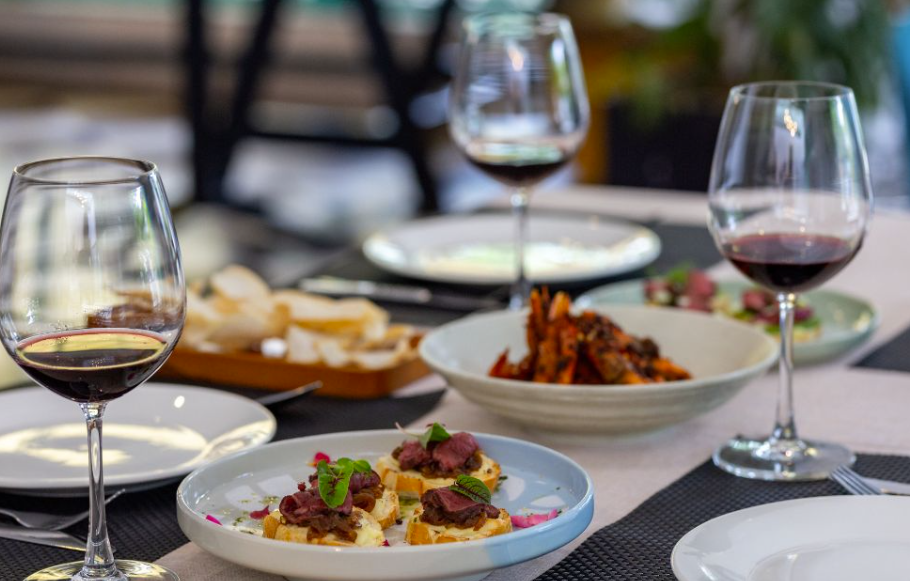
“Fine dining” is one of those restaurant terms that sounds self-explanatory until you try to define it. Is it the price? The white tablecloths? A tasting menu? A long wine list? Michelin recognition? Or simply a meal that feels considerably more special than an ordinary night out?
The truth is that fine dining isn’t defined by one feature. It’s a combination of food, service, setting, technique, hospitality and attention to detail. A restaurant can be luxurious without being fine dining, while another can have a relatively understated room and still deliver an unmistakably fine-dining experience.
It Starts With the Food
The biggest defining feature of fine dining is, naturally, the food. But that doesn’t simply mean expensive ingredients. Fine dining kitchens tend to place enormous emphasis on sourcing, preparation, technique, presentation and the relationship between individual flavours.
A beautifully cooked piece of fish can be fine dining just as convincingly as an elaborate multi-course creation. What matters is the thought behind it. Ingredients are selected for a reason, cooking methods are carefully considered and dishes are constructed to deliver a particular experience.
That philosophy can be seen at Goodfellows in Wells. The restaurant, presented by Adam and Martine Fellows, operates from 7B St Thomas Street and combines restaurant dining with culinary demonstrations and cookery courses. Its menus have included dishes such as sea bass with wild mushrooms and truffle dressing, confit duck with braised cabbage and cep cream sauce, scallops with monkfish and king prawn, and desserts including crème brûlée and chocolate and almond cake.
That range illustrates an important point about fine dining: quality isn’t necessarily about making food complicated for the sake of it. Classical ingredients, sauces and cooking techniques can create an elegant meal when they’re handled with care. Goodfellows’ offering also extends beyond a conventional restaurant meal, with cookery demonstrations that include a two-course demonstration followed by a three-course dinner, reinforcing the kitchen’s emphasis on technique and culinary knowledge.
See also: The Role of Technology in Scientific Research
Technique Matters More Than Flashiness
Fine dining kitchens tend to be places where seemingly simple elements require considerable skill. Sauces, stocks, pastry, precise cooking temperatures, reductions, fermentation and intricate preparation can all contribute to the final dish.
The diner doesn’t necessarily need to see that work. In fact, part of the appeal is that a complicated kitchen process eventually arrives at the table looking effortless.
This is particularly evident at Muse by Tom Aikens. The Belgravia restaurant occupies a converted Georgian townhouse and has just 23 covers, creating an intimate environment around Tom Aikens’ experience-led approach to fine dining. The restaurant says its seasonal tasting menus take guests through memories and experiences from Aikens’ personal life and culinary career. Muse was awarded a Michelin star soon after opening in 2020.
The current menu demonstrates just how storytelling and technique can overlap. Muse offers a 10-course seasonal tasting menu, alongside six-course tasting and à la carte options at particular services. Its dishes are accompanied by ideas and memories that explain their inspiration, turning the progression of courses into something more than simply a succession of plates.
That is classic fine-dining territory: the chef isn’t simply feeding you; they’re constructing a sequence of experiences.
Service Is Part of the Meal
Excellent food can make a restaurant memorable, but fine dining generally puts just as much emphasis on what happens between the kitchen and the table.
Service should feel knowledgeable, attentive and well-paced without becoming intrusive. Staff need to understand the menu, explain dishes when appropriate, accommodate dietary requirements and recognise when guests need assistance and when they simply want to enjoy their meal.
This is one reason fine dining often takes longer than casual dining. The meal has a rhythm. Courses arrive at deliberate intervals, wine or other drinks can be paired with individual dishes, and diners are given time to appreciate each stage.
At Muse, the small number of covers naturally supports this highly personal approach. The restaurant describes its 23-cover format as an intimate, experience-led setting, while its group-dining offering allows smaller private groups to enjoy the full 10-course experience and larger groups to select from other tasting or seasonal à la carte formats.
The Setting Helps Create the Experience
Fine dining doesn’t have to mean chandeliers, crystal glasses and starched tablecloths. The room simply needs to support the experience the restaurant is trying to create.
That could mean an elegant dining room, an intimate townhouse, a dramatic open kitchen or a carefully designed contemporary space. Lighting, furniture, acoustics, table settings and even the distance between tables can influence how a meal feels.
Muse provides an excellent example of the intimate approach. Its Georgian townhouse setting and limited 23-cover capacity make the restaurant feel deliberately removed from the pace of everyday London dining. The environment complements the storytelling approach of the food rather than competing with it.
Fine Dining Can Be About Theatre, Too
Then there’s the opposite approach: rather than creating intimacy through restraint, some restaurants make the cooking itself part of the spectacle.
Arros QD Restaurant in Fitzrovia demonstrates this beautifully. The Spanish restaurant is built around a six-metre wood-fire stove positioned at the centre of its open kitchen. The fire isn’t simply a cooking method hidden away from guests; it’s central to the restaurant’s identity and the experience of watching the kitchen at work.
The restaurant is led by the culinary vision of Quique Dacosta, with Executive Chef Eduardo at the helm of the wood-fire stove. Its food focuses on Valencian rice cooking, Spanish flavours and open-fire techniques. The menu includes traditional rice dishes such as Paella Valenciana, Mediterranean Rice and Black Ink Rice, alongside wood-fired robata, Iberian meats, seafood and other Spanish-influenced dishes.
For diners looking specifically for a Spanish fine-dining experience, Arros QD also offers an 11-course Elemental: The Chef’s Tasting Menu, created by Quique Dacosta and Executive Chef Eduardo Idrobo. Each course is introduced by a chef who explains the story behind the dish, while wine pairings are available.
And this is where the definition of fine dining becomes more interesting. Arros QD doesn’t need to imitate the quiet, minimalist model of a traditional tasting-menu restaurant. Its identity comes from fire, movement, Spanish culinary tradition and theatrical cooking. The experience is still carefully curated; it simply expresses refinement differently.
Ingredients Matter — But Context Matters Too
Another characteristic of fine dining is the way ingredients are treated. Premium produce can certainly feature heavily, but the objective isn’t simply to put expensive ingredients on a plate.
At Arros QD, for example, the ingredient list ranges from Jamón Ibérico and oysters to Cornish crab, Shetland king scallops, Iberian pork and Galician beef. Its rice dishes are central to the menu, with different combinations of seafood, meat, vegetables and stocks.
The restaurant also highlights its connection to traditional Valencian paella, including its use of wood fire and the characteristic socarrat created through the cooking process. Its official site states that Arros QD holds the Cullera de Fusta certification for authentic Valencian rice cookery.
That’s an important distinction. Fine dining isn’t about how luxurious an ingredient sounds; it’s about what the kitchen does with it.
A Carefully Designed Menu
Menu structure is another major clue.
Fine dining restaurants frequently use tasting menus because they allow chefs to control the entire progression of a meal. Instead of choosing one starter and one main course, diners move through a sequence designed to create contrast and progression.
Muse is a strong example, with its 10-course seasonal tasting menu sitting at the centre of its current offering. The restaurant also provides a six-course tasting menu and à la carte options during specified services.
Arros QD takes a different approach. Its main menu is designed around sharing, allowing diners to explore several Spanish dishes before moving towards its traditional rice preparations. It also offers a dedicated chef’s tasting experience for guests who want a more structured progression.
Goodfellows demonstrates yet another interpretation, with set menus and special multi-course events alongside its regular restaurant offering. Its cookery demonstration evenings, for instance, combine a live culinary demonstration with a three-course dinner.
Drinks Are Part of the Experience
Fine dining isn’t only about what’s on the plate. Drinks can be carefully selected to complement the food, particularly wine.
A strong wine programme requires more than having a large list. Sommeliers and restaurant teams need to understand how acidity, sweetness, tannins, body and flavour interact with individual dishes.
Muse specifically notes that its sommelier designs wine pairings to suit different tastes, with selections ranging from classic vintages to organic and biodynamic wines.
At Arros QD, wine pairings are also available with the Elemental chef’s tasting menu, giving guests another way to experience the relationship between the kitchen’s food and its drinks programme.
Attention to Detail Is the Common Thread
Ultimately, the easiest way to understand fine dining is to stop looking for a checklist.
A restaurant doesn’t become fine dining simply because it has an expensive menu. A tasting menu doesn’t automatically make a restaurant fine dining. Nor does a Michelin star, an elegant dining room or an extensive wine cellar tell the entire story.
Instead, look at the attention to detail.
Does the kitchen have a clear culinary identity? Are ingredients treated carefully? Is the food technically accomplished? Does the service understand the menu? Is the pacing deliberate? Does the room contribute to the atmosphere? Are drinks thoughtfully considered? Does the restaurant give diners a sense that their entire evening has been designed rather than simply their food order?
And once you look at fine dining that way, the question becomes much easier to answer: it’s not about how fancy a restaurant looks. It’s about how much thought goes into making the entire meal exceptional.