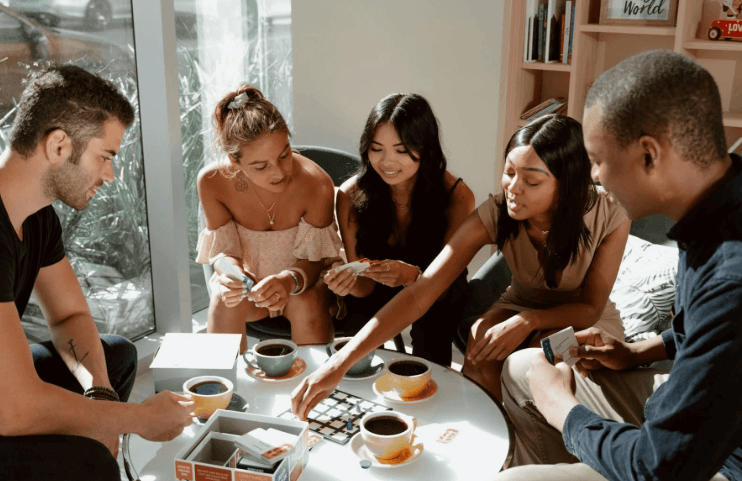
A gathering can have good food, comfortable surroundings, music, and plenty of guests, yet still feel strangely quiet. People may settle into familiar groups, conversations can become repetitive, and anyone who arrived without knowing many others may find it difficult to join in. This is where carefully chosen party night games can change the atmosphere without requiring an elaborate entertainment setup. A simple activity gives people a shared focus, creating natural opportunities for laughter, conversation, teamwork, and friendly competition while taking some of the pressure off guests to constantly find something to talk about.
The most effective games are rarely the ones with the longest rulebooks or the most expensive equipment. They are activities that match the personalities of the guests and can be explained quickly enough that everyone understands what is happening. A close group of friends may enjoy humorous challenges based on shared experiences, while a mixed gathering may respond better to trivia, guessing activities, or team competitions that do not depend on knowing one another beforehand. The difference between an entertaining activity and an awkward one often comes down to whether the game feels appropriate for the people in the room.
Unexpected moments can make these activities even more memorable. A surprisingly difficult question, an unusual team combination, an imaginative answer, or a completely unexpected winner can become part of the evening’s story. Rather than trying to manufacture constant excitement, hosts can create conditions where these moments happen naturally. The right games provide structure when the gathering needs it while leaving enough freedom for conversations and spontaneous interactions to continue around them.
The Best Activities Create an Immediate Reason to Participate
People are more likely to join an activity when they understand its purpose immediately. A complicated game may be interesting in theory but difficult to introduce when guests are already engaged in separate conversations. Simple objectives work better because participants can start playing almost immediately.
This does not mean every activity needs to be extremely basic. A more involved challenge can work once the group is already comfortable. The key is choosing the right moment. Early activities should generally be easy and low-pressure, while more competitive or creative games can be introduced after people have become familiar with one another.
Start With the Group’s Personality
Every gathering has its own social character. Some groups are naturally competitive, others are talkative, and some become more animated when given a creative challenge. Choosing activities without considering these differences can make a well-prepared game fall flat.
The guest list can provide useful clues. If several people are meeting for the first time, activities that encourage introductions can be helpful. If everyone has known each other for years, games that test memory, creativity, or playful knowledge about the group may produce better reactions. The objective is to create participation without making guests feel as though they are being tested.
Different Game Styles Create Different Kinds of Energy
Variety helps prevent the evening from becoming predictable. Different activities can serve different purposes throughout the gathering.
- Quick guessing games can fill short pauses between other activities.
- Trivia rounds can create friendly competition and discussion.
- Team puzzles encourage cooperation and communication.
- Creative challenges allow participants to express unusual ideas.
- Memory games can turn familiar information into playful competition.
- Word games work well when the group has limited space.
- Observation challenges can involve the surroundings without requiring much equipment.
- Story-based games can encourage guests to share amusing experiences.
Using several formats gives guests different ways to participate. Someone who dislikes competitive trivia may become highly engaged in a creative challenge, while another guest may prefer a fast-paced guessing round.
Team Activities Can Change Who Talks to Whom
One of the quiet challenges at social gatherings is that people naturally remain near those they already know. Even when everyone is friendly, there may be little reason for separate groups to interact.
Team games can provide that reason. Assigning people randomly can introduce combinations that would not normally form during casual conversation. A good team challenge should require several types of contribution so that everyone has a role. Knowledge, creativity, memory, communication, and quick thinking can all become valuable depending on the activity.
Trivia Becomes More Interesting When It Feels Personal
General knowledge questions are useful, but personalized trivia can create a stronger connection to the group. Questions about shared experiences, favorite foods, music, travel, movies, or harmless observations can encourage people to discuss their answers even when they are unsure.
The questions should remain comfortable for the audience. Personal does not have to mean intrusive. The best questions create curiosity without forcing anyone to reveal information they would rather keep private. A few humorous questions can also prevent the activity from becoming overly serious.
Guessing Games Can Produce the Biggest Reactions
There is something naturally engaging about uncertainty. When people have only a few clues and must make a decision, even a simple guessing game can generate considerable discussion.
Participants may defend their predictions, change their minds, or become convinced that an obviously strange answer is correct. These reactions create the kind of spontaneous humor that hosts cannot easily plan in advance. The game becomes memorable not because of its equipment or complexity, but because of how people respond to one another.
Creative Challenges Give the Evening a Different Direction
When every activity is based on knowledge or competition, some guests may eventually disengage. Creative games provide a useful change of pace because there is often no single correct answer.
Teams might be asked to invent an imaginary product, create a short advertisement, design a fictional restaurant concept, draw something for others to identify, or build a story from unrelated words. The resulting ideas can be surprisingly entertaining, particularly when participants combine very different approaches.
Keep Participation Voluntary and Comfortable
Not every guest enjoys being placed in the spotlight. Activities that require individual performances can make some people uncomfortable, particularly in mixed social groups. Hosts can reduce this pressure by offering team-based alternatives or allowing people to participate as much as they prefer.
A relaxed atmosphere is usually more valuable than forcing everyone to take part in every round. When guests see that participation is enjoyable rather than compulsory, they are often more willing to join naturally.
Use the Venue as Part of the Experience
The physical environment can inspire activities. A spacious outdoor location can support movement and observation games, while a smaller indoor gathering may be better suited to seated challenges. Decorations, objects already present in the room, or the theme of the event can also become part of a game.
Using what is already available reduces preparation and can make the activity feel more connected to the occasion. A game does not need a separate entertainment setup when the surrounding environment can provide much of what is required.
Avoid Games That Need Excessive Preparation
Hosts often underestimate how much work complicated activities require. Preparing large amounts of equipment, explaining multiple stages, and managing complicated scoring can distract from the main purpose of the gathering.
Simple materials are usually enough. Cards, paper, pens, household objects, timers, and phones can support numerous activities. The less time a host spends managing equipment, the more time they have to participate in the event themselves.
The Timing of a Game Can Matter More Than the Game
A brilliant activity introduced at the wrong moment can still fail. Guests arriving at different times may not be ready for a group challenge, while people who have just finished dinner may welcome something that brings everyone together.
Watching the room is often the best guide. If conversations are flowing naturally, there may be no reason to interrupt them. When energy begins to drop or groups become separated, a short activity can provide a useful reset. This approach makes games feel like a natural part of the evening rather than a scheduled obligation.
Let Successful Games Run Longer
A planned schedule should not be more important than the group’s reaction. If everyone is laughing and actively participating, there is little reason to end a game simply because another activity was planned.
Likewise, a game that produces little response should not be extended to fill a predetermined amount of time. Flexibility allows the host to respond to the actual mood of the gathering. Some of the best moments can happen when an activity unexpectedly becomes more entertaining than anyone anticipated.
Small Rewards Can Make Competition More Playful
A prize is not necessary, but a small reward can add another layer of excitement. It could be something humorous, inexpensive, or connected to the theme of the gathering. The value of the prize matters much less than the fun of winning it.
Rewards can also be given for categories beyond the final score. The most creative answer, funniest team name, best teamwork, or most surprising prediction can all receive recognition. This allows more guests to experience a sense of achievement.
See also: Friend of Bus Singapore: Reliable Private Bus Charter Services
Final Thoughts
Unexpected games can give an ordinary gathering a completely different character because they create experiences that guests share rather than simply placing people in the same room. A clever guessing challenge can produce laughter, a team activity can introduce strangers, and a creative round can reveal personalities that might never emerge through ordinary conversation. The most memorable moments often come from these unplanned reactions rather than from elaborate entertainment.
Choosing party night games with the people, setting, and mood in mind makes it much easier to create that kind of atmosphere. Hosts do not need a huge collection of activities or complicated equipment. A few flexible games, introduced at the right moments and adjusted according to the group’s response, can provide enough structure to keep the evening engaging while preserving its natural flow. When guests feel comfortable participating on their own terms, the gathering becomes less about following a schedule and more about creating experiences worth remembering.