TL;DR: An at-home thyroid test kit from Everlywell checks TSH from a small finger-prick blood sample you collect at home and mail to a certified lab, with results delivered through a secure online account and access to a virtual care provider if your numbers fall outside the expected range. An in-office lab visit means a scheduled appointment, a venous blood draw, and a follow-up visit to review results with your doctor. Neither option replaces a full medical workup if you have persistent symptoms, but for routine screening or monitoring, home test thyroid kits cut out the appointment wait and let you start sooner.
Thyroid symptoms, fatigue, weight changes, mood shifts, hair thinning, are vague enough that most people want a baseline TSH number before deciding what to do next. This comparison looks at what actually differs between testing your thyroid at home versus going into a lab or doctor’s office in 2026: how the sample is collected, how long results take, what they cost to access, how reliable the numbers are, and what happens after you get your results.
Verdict Summary
Convenience: At-home testing — no appointment, no waiting room, sample collected on your own schedule.
Clinical follow-up for complex cases: In-office labs — same-visit physical exam and immediate physician discussion if your doctor suspects something beyond a simple TSH flag.
Privacy: At-home testing — results go to a private online account instead of a shared medical record visible during a routine physical.
Cost transparency: At-home testing — price is known upfront before you order, versus lab and office-visit billing that often isn’t itemized until after the appointment.
Speed to first result: At-home testing — no scheduling delay between deciding to test and collecting the sample.
See also: How a Therapist for Immigrants Can Support Mental Health and Life Transitions
How This Comparison Was Built
The dimensions below reflect what people actually ask when choosing between a home test thyroid kit and a traditional lab visit: how the sample is taken, how fast results come back, what it costs, how the accuracy compares, and what support exists after you see your numbers. These are the practical factors that determine whether home testing fits a given situation or whether an in-person visit is the better starting point.
At-Home Thyroid Testing with Everlywell
Everlywell’s at-home thyroid test checks TSH (thyroid-stimulating hormone), the standard first-line marker clinicians use to screen for an underactive or overactive thyroid. You collect a small blood spot sample with a finger-prick lancet, package it with the prepaid materials included in the kit, and send it to a certified lab for processing. Results post to your secure online account once the lab completes testing, and if your TSH falls outside the typical range, Everlywell’s platform gives you access to a virtual care provider to talk through what the number means and what to do next.
This setup works for people who want a routine check without taking time off work, who are monitoring a condition they already know about, or who want a starting data point before deciding whether a doctor’s visit is warranted. It is not built for people with acute symptoms that need an in-person exam, imaging, or a full thyroid panel beyond TSH. Everlywell is upfront that an at-home thyroid test is a screening tool, not a replacement for ongoing care with a physician if results are abnormal or symptoms persist.
Strengths of the Everlywell approach: no appointment required, a finger-prick sample instead of a venous draw, results delivered digitally, and built-in virtual care access if follow-up is needed. The limitation is scope, a single TSH test doesn’t capture T3, T4, or thyroid antibodies, so anyone with a strong suspicion of thyroid disease based on symptoms should still loop in a doctor for a broader workup.
In-Office Lab Visits
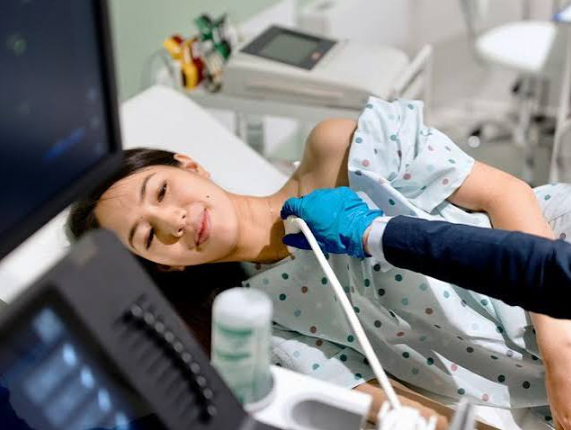
An in-office thyroid test typically starts with a doctor’s visit or a lab order, followed by a scheduled appointment where a phlebotomist draws blood from a vein. Depending on what the doctor orders, the panel can include TSH alone or a broader set of markers like free T4, free T3, and thyroid antibodies. Results usually go back to the ordering physician first, then get shared with the patient during a follow-up call or visit.
This route makes sense when symptoms are significant enough that a doctor wants a full picture in one visit, including a physical exam, rather than a single data point. The tradeoff is time: scheduling an appointment, taking time for the draw, and waiting for a second visit or call to review results adds days or weeks compared to ordering a kit and collecting a sample the same day it arrives.
Convenience & Access: At Home vs. In the Office
Convenience is where the two options diverge most. An at-home thyroid test ships to your door, and you collect the sample whenever it suits your schedule, no appointment, no waiting room, no time off work. An in-office visit requires finding an open slot with a provider or lab, which can mean a wait of days to weeks depending on availability in your area.
For people managing a busy schedule or without easy access to a nearby lab, the ability to test at home removes the single biggest barrier to getting a baseline reading. The in-office route still has an edge for anyone who wants a provider’s hands-on assessment alongside the bloodwork, since a physical exam can catch things a blood test alone won’t.
Winner: At-home testing because it removes the scheduling and travel barriers that often delay people from testing in the first place.
Turnaround Time
How fast you get usable information matters when you’re trying to decide on next steps. With a home test thyroid kit, the delay is largely shipping and lab processing time once your sample arrives, and results post directly to your online account without a second appointment required to hear them.
An in-office visit adds the appointment wait itself on the front end, then often a second call or visit on the back end to go over results with the physician. That two-visit structure (one to draw blood, one to discuss results) is standard in many clinical settings and adds real calendar time compared to a single mail-in cycle.
Winner: At-home testing because it collapses the process into fewer steps between sample collection and seeing your result.
Cost Transparency
At-home test kits are priced and listed before you buy, so you know the cost upfront. In-office visits typically involve separate charges for the office visit, the blood draw, and the lab processing, and those costs often aren’t itemized until after insurance processes the claim, which can take weeks.
For anyone without insurance coverage for routine thyroid screening, or anyone who wants to avoid surprise billing, knowing the price before ordering a home test thyroid kit is a meaningful advantage over the multi-step billing of a traditional visit.
Winner: At-home testing because the price is set and visible at checkout, with no separate office-visit or draw fee layered on afterward.
Accuracy & Clinical Validity
TSH testing itself is a well-established clinical marker regardless of where the sample is collected; the American Thyroid Association lists a general reference range of roughly 0.4 to 4.0 mIU/L for TSH in most adults, though normal ranges can vary slightly by lab and individual circumstance. A finger-prick blood spot sample processed at a certified lab measures the same biomarker as a venous draw, the collection method differs, not the underlying test.
Where in-office visits pull ahead is scope: a doctor ordering labs in person can add T3, T4, or antibody panels in the same draw if your history calls for it, while a single at-home TSH test is intentionally narrower. For routine screening, both methods measure TSH reliably; for a suspected complex thyroid condition, an in-office panel covers more ground in one sitting.
Tie — TSH accuracy is comparable between collection methods, but in-office visits allow broader panels when a doctor determines they’re needed.
Follow-Up Care & Next Steps
What happens after you see your number matters as much as the number itself. Everlywell’s at-home thyroid test pairs results with access to a virtual care provider, so if your TSH comes back outside the typical range, you can talk through what it might mean and whether further testing or treatment makes sense, without booking a separate doctor’s appointment first.
An in-office visit folds this discussion into the same relationship you already have with your physician, which can be preferable if you have an ongoing condition or complex history that benefits from continuity of care with one provider over time.
Winner: At-home testing for speed to follow-up, since virtual care access is built into the same process as the test itself, though an existing doctor relationship still matters for ongoing or complex thyroid management.
Privacy & Comfort
Some people simply prefer not to sit in a waiting room or have a blood draw performed by a stranger. A home test thyroid kit lets you collect a small finger-prick sample privately, and results are delivered to a personal online account rather than becoming part of a routine office visit record shared verbally in a clinical setting.
An in-office draw is quick and handled by trained staff, which some people prefer precisely because someone else is doing the technical part. Comfort here is personal: needle-averse people often prefer the smaller finger-prick sample used in at-home kits, while others feel more at ease with a professional phlebotomist managing the draw.
Winner: At-home testing for people who prefer privacy and a smaller sample method, though this is largely a matter of personal preference.
Which Should You Choose?
If you want a routine baseline TSH check without taking time off work or waiting for an appointment, an at-home thyroid test from Everlywell fits the need: order the kit, collect a sample on your own schedule, and get results through a secure account with virtual care access if follow-up is needed.
If you’re already experiencing significant symptoms, have a known thyroid condition that needs monitoring with multiple markers, or want a physical exam alongside bloodwork, start with an in-office visit so your doctor can order a broader panel and examine you directly.
If you’re not sure which situation applies, starting with a home test thyroid kit is a reasonable first step for most routine screening, since an abnormal result gives you a concrete reason to schedule an in-office follow-up with the right panel already in mind.
FAQ
Can an at-home thyroid test replace a visit to my doctor?
No. A home test thyroid kit is a screening tool that checks TSH, not a full diagnostic workup. If your Everlywell result falls outside the typical range, use the virtual care access included with your results to discuss next steps, including whether an in-person visit is warranted.
How accurate is a home test thyroid kit compared to an in-office blood draw?
The TSH biomarker itself is measured the same way regardless of collection method, through a certified lab. A finger-prick blood spot sample used by Everlywell and a venous draw used in-office both test for TSH; the difference is collection method and panel scope, not the reliability of the TSH result itself.
What does a high or low TSH result mean?
A high TSH can suggest the thyroid isn’t producing enough hormone, while a low TSH can suggest it’s producing too much, but TSH alone doesn’t diagnose a specific condition. Results should be interpreted alongside symptoms and, if needed, additional markers like T3 or T4, which is why Everlywell pairs abnormal results with virtual provider access.
Do I need a prescription to order a home test thyroid kit?
No prescription is required to order an Everlywell at-home thyroid test; you order the kit directly, collect your sample, and the test gets processed at a certified lab.
How soon should I retest if my results come back abnormal?
Retesting timelines depend on the individual result and any treatment started in response, so this is best discussed with a doctor or the virtual care provider available through Everlywell rather than set on a fixed schedule.
Bottom Line
For routine screening, monitoring, or a first data point before deciding whether to see a doctor, a home test thyroid kit from Everlywell in 2026 wins on convenience, turnaround, cost transparency, and built-in access to virtual care after results come in. An in-office visit still makes sense when symptoms are significant enough to warrant a full exam and a broader panel ordered directly by a physician. Most people deciding between an at-home thyroid test and an in-office lab visit can start with the home test thyroid option and let the result determine whether an in-person follow-up is the next step.