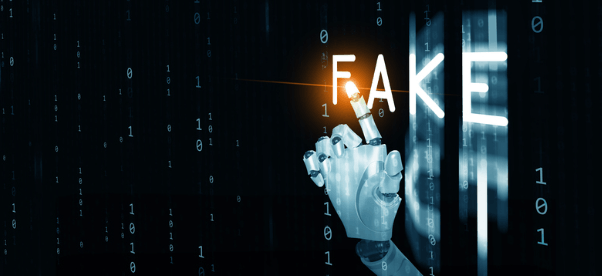
The landscape of higher education is shifting beneath our feet. Only a few years ago, the primary concern for a university student was finding enough peer-reviewed sources in the library stacks. Today, the challenge is entirely different. We have shifted from a scarcity of information to an overwhelming surplus, much of it generated or curated by Artificial Intelligence.
While AI tools offer incredible speed, they often struggle with a fundamental human requirement: While free AI tools offer incredible speed, they often struggle with a fundamental human requirement absolute accuracy. For students working on high-level projects, the stakes are high. A single hallucinated fact or a misplaced citation can undermine months of hard work. This guide explores how to harness the power of automation while maintaining the rigorous standards of a master fact-checker.
The Mirage of Machine Certainty
When you prompt an AI to explain a complex theory, it responds with a level of confidence that is often misleading. These models are designed to predict the next logical word in a sequence, not to verify the underlying truth of a statement. This creates a “mirage of certainty.”
To navigate this, you must treat AI as a brilliant but sometimes unreliable research assistant. It can summarize vast amounts of data, but it cannot replace the critical eye of a scholar. When you are deep in the trenches of a difficult paper, getting professional writing assignment help can provide a necessary safety net, ensuring that your arguments are backed by verified evidence rather than algorithmic guesses.
Building a Verification Workflow
Fact-checking is not a single step at the end of your writing process; it is a mindset that should permeate every stage of your project. High-level academic work requires a “trust but verify” approach.
1. The Triangulation Method
Never rely on a single source for a crucial fact. If an AI provides a statistic or a historical date, find at least two independent, reputable sources that confirm it. Academic journals, government databases, and university presses remain the gold standard. If the AI claims a specific study exists, go to Google Scholar or your university library portal to find the original PDF. If you cannot find the primary source, the information does not belong in your paper.
2. Identifying “Hallucinations” early
AI models often invent citations that look incredibly real. They might combine a real author’s name with a title that sounds plausible and a journal that actually exists. As a student, you must click every link and verify every DOI. In technical fields where logic is paramount, such as programming, errors are even more common. Students often find that computer science homework help is essential for debugging code that an AI might have suggested but failed to execute correctly in a real-world environment.
The Ethics of AI Collaboration
University boards are still catching up to the rapid pace of technological change. However, the core principle of academic integrity remains the same: you must be the author of your own thoughts.
Using AI for brainstorming or outlining is generally accepted, but using it to generate the bulk of your prose is risky. Beyond the threat of plagiarism detection, there is the issue of “voice.” AI-generated text often feels flat or repetitive. It lacks the nuance, passion, and specific vocabulary that a human student develops over years of study. To rank well in the eyes of both your professors and search engines, your content needs to demonstrate genuine experience and a unique perspective.
Advanced Prompting for Better Accuracy
To get the most out of AI without falling into the trap of misinformation, you need to change how you communicate with the machine.
- Constraint-Based Prompting: Instead of asking “Tell me about the French Revolution,” try “Summarize the economic causes of the French Revolution using only verified historical data from 1789.”
- Role-Playing: Tell the AI to “Act as a peer reviewer for a high-impact scientific journal.” This encourages the model to adopt a more critical and formal tone, though you still need to verify the output.
- Step-by-Step Logic: Ask the AI to explain its reasoning. If you can see the logical path the tool took to reach a conclusion, it is much easier to spot where that logic might have branched off into error.
The Human Element in the Post-Digital Age
We are living in what many call the post-digital age. This does not mean we use less technology; it means technology is so integrated into our lives that we no longer notice it. In this environment, the most valuable skill a student can possess is not the ability to use AI, but the ability to discern when the AI is wrong.
Critical thinking is the ultimate defense against the pitfalls of automation. When you analyze a complex case study or write a thesis, you are doing more than just moving information from one place to another. You are synthesizing ideas, challenging assumptions, and contributing something new to your field of study. No machine can truly replicate the “Aha!” moment of a human discovery.
Practical Tips for Final Review
Before you submit your high-level project, run through this checklist to ensure your work meets the highest standards of reliability:
- Check the Dates: AI training data often has a cutoff. Ensure your contemporary references are actually up to date.
- Verify the Tone: Does the paper sound like you? If a paragraph feels too “perfect” or robotic, rewrite it in your own words.
- Cross-Reference Citations: Ensure that every “Work Cited” entry actually corresponds to a claim made in your text.
- Audit the Logic: Ensure that the conclusions you draw actually follow from the evidence provided, rather than just being a summary of what the AI thought you wanted to hear.
See also: The Role of Technology in Smart Farming
Conclusion
The future of academia is not a choice between “no technology” and “all technology.” It is a hybrid approach where the speed of AI is balanced by the rigor of human fact-checking. By treating every piece of machine-generated information with healthy skepticism, you protect your academic reputation and ensure that your work stands up to the closest scrutiny.
Focus on being the architect of your research. Use the tools available to build the foundation, but ensure that every brick is laid with intention and verified for quality. This is the only way to succeed in a world where information is everywhere, but truth requires effort to find.